





How football helped Togs find their identity – and their voice
28/07/2026

For Isobel Hartog, better known as ‘Togs’, football was never supposed to become the centrepiece of their life.
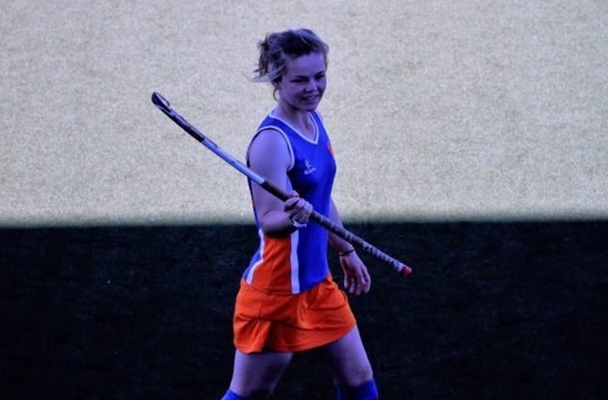
Growing up in Brisbane, Australian rules wasn't the obvious path. They spent nearly a decade playing field hockey while their younger brother pursued football, with Togs often tagging along to games because, as the youngest sibling, they couldn't exactly be left at home.
It wasn't until they were 18 that they picked up a Sherrin for themselves.
“When I finished school, I just decided that footy was a great way to get my aggression out. It was all just fun at the start,” Hartog said.
That decision would change the course of their life.
Within a few years, Togs had packed everything they owned into two suitcases and moved from Brisbane to Melbourne, chasing stronger competition and a fresh start. But the move wasn't just about football.
“I really just wanted a lifestyle change. I wanted to play better footy and see how far I could go. It was also my chance to move out of home and not have to rely on my parents anymore,” they said.
“I don’t think I’d be half the person I am now. The move made me grow up pretty quickly. I was really kind of quiet before, and moving to Melbourne pushed me outside my comfort zone. I had to create a new friend group, meet people through footy and make those connections. I honestly think it was one of the best decisions I ever made.”
That leap of faith wasn't easy. Having only started playing football at 18, Togs was suddenly competing against players who had spent their childhood developing the game. Still, the late start never stopped them from dreaming bigger.
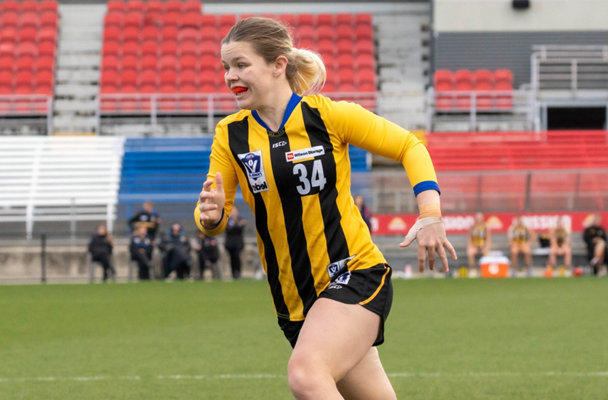
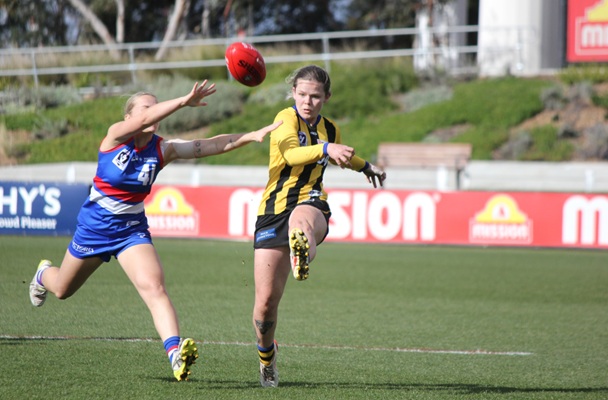
After asking their coach at their local club, University of Queensland, if they knew anyone in Victoria, Togs earned a trial at Port Melbourne. Two weeks later they returned for a practice match, and shortly after that they had secured a VFLW contract. They eventually made the move to Sandringham Football Club, continuing a journey they once weren't sure was even possible.
“I wanted to play footy at the highest level I possibly could, but I honestly didn't know how I was going to do it,” they said.
“My family didn't really grow up around footy because we were in Queensland, so I didn't know people in the system. Looking back, it all feels a little bit rogue.”

While football was opening doors on the field, Melbourne was helping Togs discover something much deeper away from it. Their journey to understanding their gender identity wasn't immediate.
“That definitely wasn't an easy one. I always knew I liked women, and that part was probably easier to understand,” they recalled.
“But, when it came to my gender, I just remember thinking, ‘I don’t resonate with she/her pronouns. I don’t really know what this means.’”
At the time, there were very few openly non-binary athletes in Australian sport. Without many role models to look towards, Togs instead leaned on supportive friends and slowly explored what felt authentic.
“I saw something on Instagram that said, ‘Non-binary doesn't have a box. That's the whole point’, so I started using she/they pronouns, and then I realised I really resonated when people used they/them. I fully changed them and I've never looked back.”
Today, that confidence allows Togs to create safe spaces for others to ask questions without judgement.
“I get to express myself however I want to, and because I get to do that, younger girls often feel comfortable asking questions or just being themselves around me. I always tell people that no question is a silly question because that's how we learn,” they reflected.
Representation became even more meaningful when AFLW player Tori Groves-Little became the league's first openly non-binary footballer.
"I remember seeing it on my lunch break at work. It was just this really cool feeling of, ‘There's more of us!’ " Togs recalled.
“You always know your club supports you, but seeing someone on that bigger stage made me think, 'Okay, cool. I'm in the right space.’ ”
Since then, players including Darcy Vescio and Tilly Lucas-Rodd have continued building that visibility, something Togs believes remains essential.
“There are so many people from different backgrounds, sexual orientations and gender identities who don't think they have a place in sport,” Togs said.
“When you can actually see someone like yourself, it makes such a difference."
Now, whether it's creating opportunities for teammates or advocating for greater inclusion, Togs hopes to leave the game in a better place than they found it.
“I just want to keep playing for as long as possible. But more than that, I want to help create a safe space where people feel comfortable being themselves,” they said.
“If you’ve got a safe space, you’re much more likely to ask the silly question that helps you get better. That's the sort of environment I want to be part of.”
For Togs, football has become so much more than the game they discovered when looking for an outlet; it became the place where they found community, the place where they found confidence, and ultimately, the place where they found themselves.
Written by Casey McGuire - Sandringham FC Media